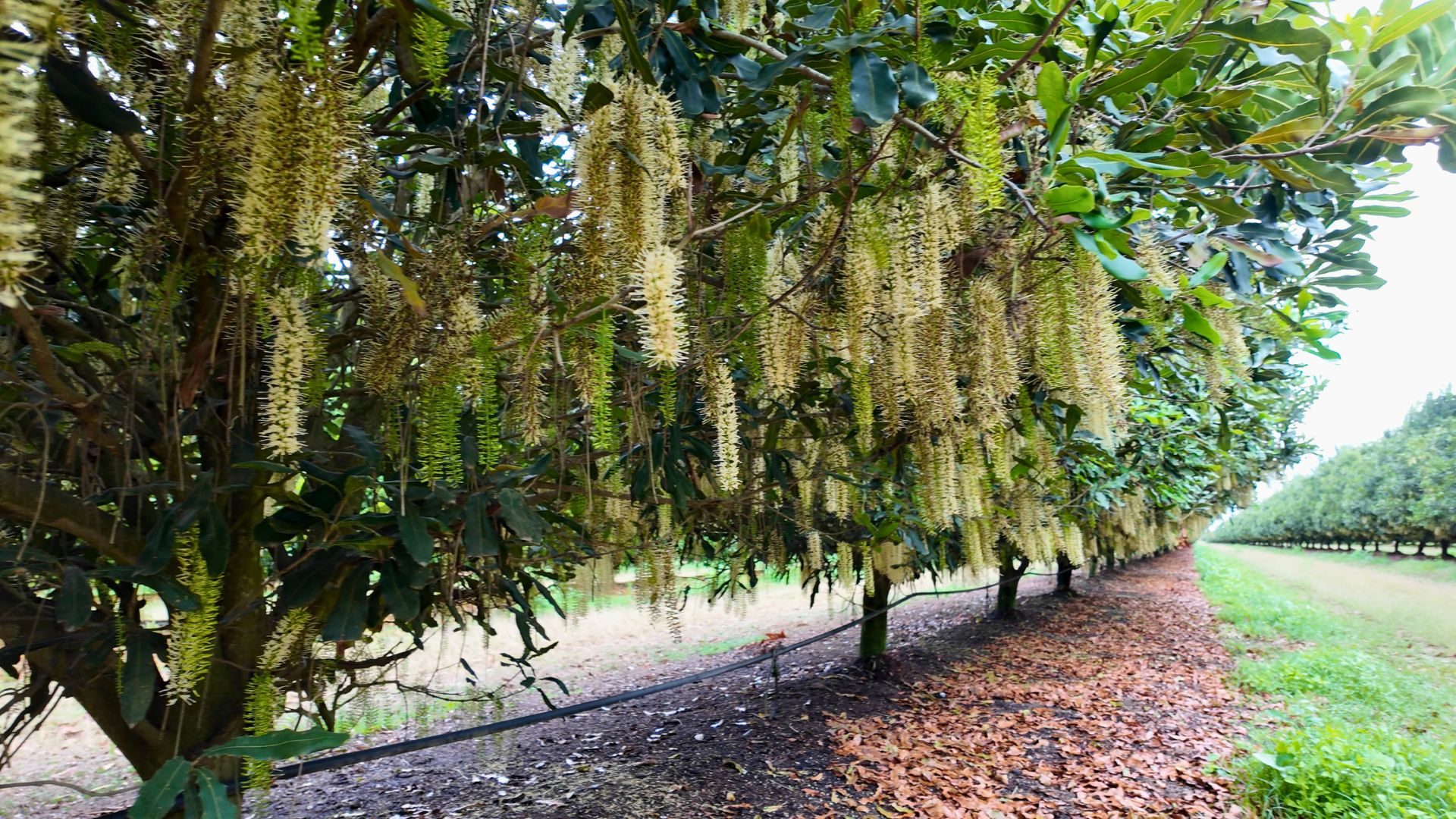
From Early to Late: Understanding Macadamia Flowering
Flowering marks the beginning of the next macadamia crop, but not every cultivar reaches its main flowering period at the same time. Some flower earlier, others peak through the middle of the period, and later cultivars may continue flowering after the early varieties have finished.
Understanding this general sequence helps explain why different blocks can look quite different at the same point in the season—and why flowering overlap between cultivars matters for pollination.
How well do you know the flowering order of cultivars grown across MFM-managed orchards? Try the two interactive challenges below.
Why Flowering Timing Matters
Macadamias rely heavily on cross-pollination to support good nut set and yield. Cross-pollination occurs when insects transfer pollen from one cultivar to another compatible cultivar.
European honey bees are the most widely important macadamia pollinator, while native stingless bees and other naturally occurring insects also contribute. Because pollen needs to move between cultivars, those cultivars must have flowers open at overlapping times.
This is why flowering timing is considered when planning cultivar combinations, orchard layouts and pollination strategies.
A Short Window for Pollination
The individual flowers along a macadamia raceme do not all open together. They open progressively and can only be pollinated when fully open. Each flower also remains attractive to pollinating insects for a relatively short time.
This creates an important window in which flower health, suitable weather and pollinator activity need to come together.
Macadamia trees produce a very large number of flowers, but only a small proportion will develop into mature nuts. Much of the flower and early nutlet loss seen after flowering is a normal part of the tree’s production cycle.
Activity 1: Early, Mid or Late?
Start by sorting each cultivar into its indicative main flowering period:
- Early
- Mid
- Late
Each cultivar can be placed in any basket, so consider your answers carefully. Once every cultivar has been placed, select Check to see how you went.
Activity 2: Advanced Flowering Challenge
Now test your knowledge of the broader flowering sequence.
Arrange the cultivars according to their approximate position in the flowering guide, beginning with the earliest at the top and finishing with the latest at the bottom.
Place all the cultivars before selecting Check.
Why Actual Flowering Can Differ
The guide provides a general indication of when each cultivar usually reaches its main flowering period. It is not a fixed calendar.
Actual timing and flowering duration can change according to the growing region, seasonal temperatures, soil moisture, tree health and orchard conditions. Warmer winter and early spring conditions may bring flower emergence forward, while cooler conditions can delay it.
This means a cultivar will not necessarily flower on the same dates at every orchard or in every season.
What Teams May Notice
At any one time, different blocks may be at different stages—from emerging and elongating racemes through to open flowers, peak flowering or the end of flowering.
Teams may also notice differences in bee activity, sunlight and airflow through the canopy, flower condition following wet or humid weather, and signs of pests or flower disease.
These observations help build a clearer picture of flowering progress and the conditions supporting pollination. Any concerns should be reported through the appropriate farm management or agronomy channels.
What Supports Successful Pollination?
Having bees in the orchard is important, but successful pollination also depends on healthy flowers, suitable conditions and well-timed orchard management.
- Soil moisture: Adequate soil moisture supports flower development and early nut set. As temperatures rise, tree water demand increases, making soil-moisture monitoring and consistent irrigation increasingly important.
- Tree nutrition: Flowering draws on the tree’s stored carbohydrates and available nutrients. Boron supports functional flower development, while nutrition programs must be carefully planned to avoid deficiencies or excessive applications.
- Weather: Cool to mild conditions generally support floral development. High temperatures, low humidity, strong winds or extended wet weather can shorten flower life or reduce pollinator activity.
- Flower health: Lace bug, flower caterpillar and flower diseases can damage racemes before pollination occurs. Monitoring is particularly important as flowers emerge and open.
- Canopy conditions: Sunlight encourages bee activity, while good airflow helps flowers dry following rain or heavy dew. Dense, shaded canopies may provide less favourable conditions for pollination and increase flower-disease pressure.
- Pollinator numbers and distribution: Bee activity can vary across an orchard. Spreading managed hives through blocks generally provides better coverage than concentrating them in one location.
- Water and habitat for bees: Honey bees require access to water, while diverse flowering vegetation around orchards provides food and habitat for managed and naturally occurring pollinators outside the macadamia flowering period.
- Chemical application: Products used during flowering must be selected and timed carefully. Farm teams, managers, pest consultants and beekeepers need clear communication before applications occur.
- Cultivar overlap: Cross-pollination requires compatible cultivars to have open flowers at the same time. Their position within the orchard also matters because much of the pollen movement between cultivars occurs over relatively short distances.
Teams can support flowering management by reporting blocked irrigation emitters, uneven soil moisture, damaged flowers, low bee activity, hive access issues or unusual differences between blocks.
Find Out More
Explore the Australian Macadamia Society’s pollination resources or read the public Macadamia Pollination Gap Analysis and Industry Opportunities report.
The flowering periods used in these activities are indicative and may vary with location, season and orchard conditions. Activity source: Australian Macadamia Society, Pollination Fact Sheet, July 2022.