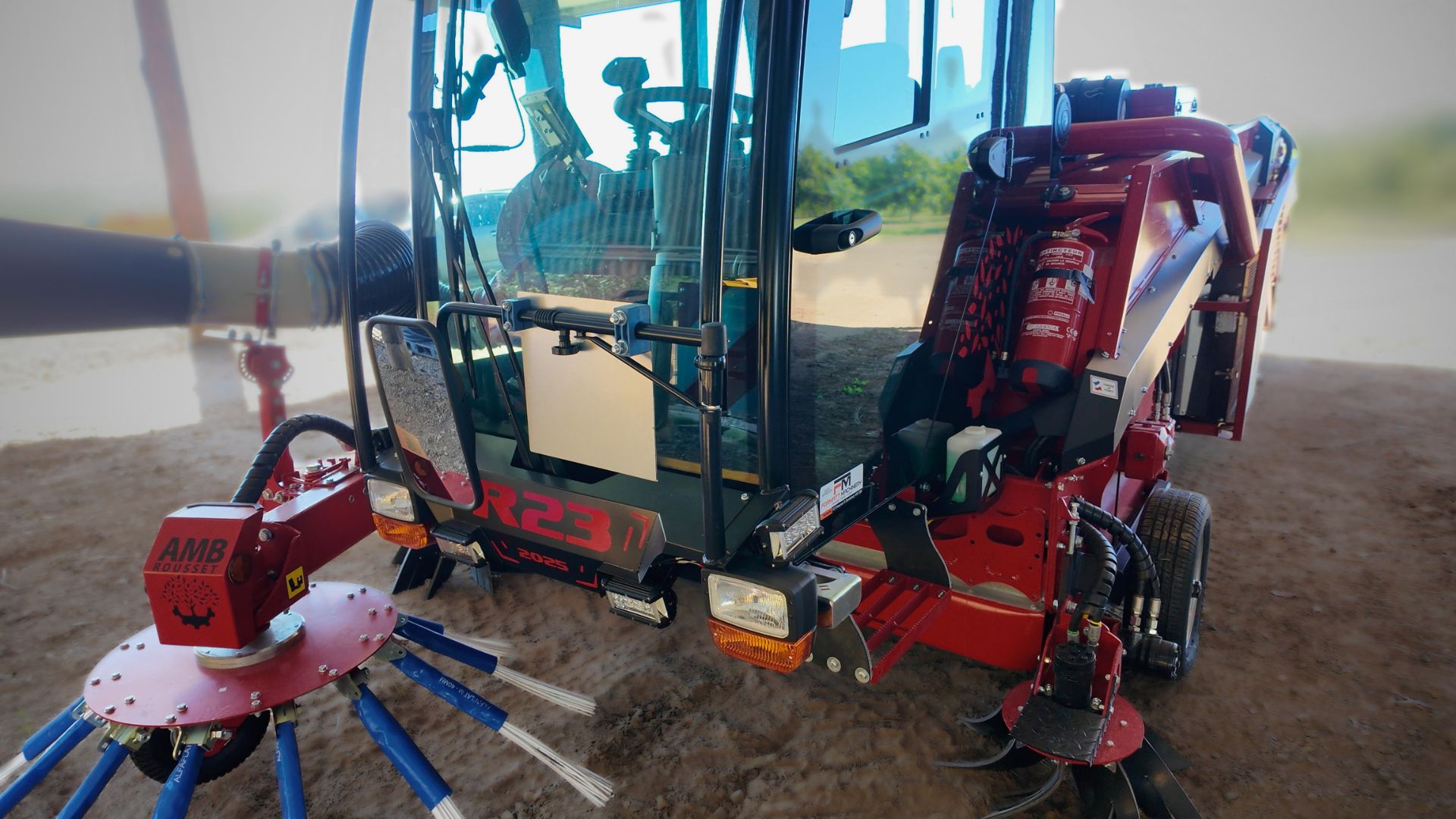
RMB R23 Harvester – Operator Training
This session at Bunya Orchard provides a full introduction to the RMB R27 harvester, working through the machine with the Format Machinery team in real operating conditions.
The walkthrough covers the full operating system — from daily maintenance through to in-field setup and adjustment. What follows is a structured version of that session, focused on how the machine should be operated and maintained in orchard conditions.
The R27 is a highly adjustable machine. Performance is not fixed — it depends on how it is set up, maintained, and operated day to day. This guide is intended to give operators a clear baseline and help avoid the common issues that come from poor setup or missed maintenance.
Chapters
Watch the full RMB R27 Harvester Introduction
00:00 Introduction & Maintenance Overview
00:30 Daily Greasing Points (Pivot Pins, Hubs, Rotor)
01:16 Chain Lubrication & Hidden Grease Points
01:43 Fluids Overview (Hydraulic Oil, Diesel, No AdBlue)
02:14 Bin & Cylinder Grease Points
02:40 Safety Locks & Battery Location
03:01 Chain Drive Maintenance
03:43 Gearbox Oil Check (Front Pickup)
04:10 Pickup Setup & Ground Adjustment Basics
05:05 Skirts Setup & Nut Retention
06:27 Air Filtration System (Cab + Engine)
07:24 Filter Cleaning Intervals & Dust Management
08:35 Cab Controls Overview
09:48 Pickup Door Adjustment & Blockage Clearing
11:02 Bin Operation (Lift & Tilt Safety)
11:37 Rear Steer & Crab Function
12:18 Blower & Sweeper Controls
13:19 Auto Harvest Function
14:10 Head Float & Ground Pressure Settings
15:41 Rotor Reverse & Fan Adjustments
16:33 Drive Controls & RPM Behaviour
17:10 Screen Controls (Blower, Sweeper, Rotor Speeds)
18:37 Chain Speed & Throughput Adjustments
20:01 Manual Float & Cruise Control
21:04 Diagnostics & Fault Codes
22:14 Service Intervals & Hours Tracking
24:05 Electrical Diagnostics (Inputs/Outputs)
26:20 Auto Function Speed Adjustments
27:50 DPF & Regeneration Settings
29:27 Field vs Road Mode (Joystick Sensitivity)
30:20 Button Mapping & Customisation
31:22 Preparing Machine for Maintenance
33:16 Safe Bin Lift & Lockout Procedure
34:32 Front Lift & Safety Stands
36:39 Engine Bay Overview & Cooling System
37:42 Axle & Kingpin Greasing
38:56 Manual Hydraulic Pump (Emergency Use)
39:40 Cleaning & Fire Risk Management
40:04 Lateral Blower & Airflow Adjustment
41:37 Rock Catchers & Daily Cleanout
42:53 Radiator & Cooling Pack Cleaning
44:03 Hub Oil Checks
45:25 Hydraulic System Overview
46:22 Pickup Rubbers & Wear Management
47:43 Pickup Door & Rotor Positioning
48:40 Height Wheel Adjustment
49:49 End-of-Maintenance Reset Procedure
51:38 Moving to Field Operation
53:02 Hopper Operation in Practice
54:24 Sweeper Arm Controls
55:10 Rear Steer Offset Adjustment (In Field)
56:38 Blower Tuning for Crop Conditions
57:28 Harvest Mode & Rotor Direction
58:21 Sweeper Setup in Orchard Conditions
59:37 Fine Adjustment (Angle, Height, Rods)
1:00:06 Blower Direction Adjustment
1:01:07 Final Setup Adjustments
1:06:00 Wear Rates & Rubber Lifespan Discussion
Daily Maintenance (Non-Negotiable)
Most reliability issues in nut harvesters come back to missed or inconsistent maintenance. The R27 is no different — daily checks are what keep the machine running consistently across the season.
Greasing Points
Watch the Daily greasing overview (0:30)
Daily greasing should cover:
- All pivot pins on the pickup assembly
- Front arm pivot points
- Hub bearings (light grease only)
- Pickup rotor bearings
- Chain idlers, including hidden grease nipples
A common issue on these machines is missed grease points, particularly those that are not immediately visible. These tend to fail early if not serviced consistently.
Greasing should be light and regular. Over-greasing can cause seals to fail, which creates more problems than under-greasing.
Chains and Drive Components
Watch the Chain lubrication and hidden points (1:16)
The elevator chain requires regular lubrication. Frequency depends heavily on conditions — dust, dirt, and leaf matter all affect how quickly lubrication breaks down.
In most conditions:
- Light oiling weekly is a baseline
- Increase frequency in dry or dusty conditions
A tacky chain lubricant is generally more effective than light oil, as it stays on the chain rather than running off.
Fluids Check
Watch the Fluid locations and checks (1:43)
Daily checks should include:
- Hydraulic oil level (sight glass)
- Engine oil
- Coolant
- Diesel
This model does not use AdBlue, which simplifies the system slightly, but does not reduce the importance of regular fluid checks.
Air Filtration (Critical System)
Watch the Air filtration system overview (6:27)
Air filtration is one of the most important maintenance areas on a nut harvester due to the constant dust load.
System layout includes:
- Pre-cleaner filter (daily clean)
- Main engine air filter (weekly clean)
- Safety element (replace only)
The safety element should never be cleaned. If dust is reaching this filter, it indicates a failure in the upstream filtration system and needs to be addressed immediately.
Cleaning and Fire Risk Management
Watch Cleaning and fire risk (39:40)
End-of-shift cleaning is essential.
Daily routine:
- Blow down the entire machine
- Clean radiator and cooling pack
- Empty rock catchers
Dust and leaf build-up presents a real fire risk in harvest conditions. It also reduces cooling efficiency and increases wear.
Blowing down is preferred over washing. Water tends to push debris into areas where it causes longer-term issues.
Safe Maintenance Procedure
Watch Lockout and access procedure (33:16)
Before working under the machine:
- Lift the bin fully
- Engage safety locks on both sides
- Lift the front of the machine
- Engage front safety stands
- Shut the machine down
Hydraulics alone are not a safe support system. Always use mechanical locks before working underneath.
Pickup Setup (Where Performance Is Won or Lost)
Watch Pickup setup basics (4:10)
Pickup setup has the biggest impact on:
- Recovery rate
- Sample cleanliness
- Wear on components
Incorrect setup will either lose nuts or increase wear — often both.
Pickup Height
- Target working depth: 100–150 mm
- Enough to pull grass and nuts through
- Avoid digging into the soil
Lower settings increase aggressiveness but also increase wear. Higher settings reduce contact but may miss nuts.
Adjustment needs to match ground conditions and grass load.
Skirts and Nut Retention
Watch Skirt setup (5:05)
Skirts control nut retention within the pickup zone.
- Aim for approximately 10 mm clearance from the ground
- Prevent nuts rolling out the sides
If set too low:
- Increased wear
- Dragging on the ground
If set too high:
- Nuts escape the pickup area
Pickup height should always be set first, followed by skirt adjustment.
Sweeper and Blower Setup
Watch Sweeper and blower controls (12:18)
Sweepers
Sweepers are responsible for moving nuts into the pickup zone.
- Should be set at a slight angle
- Guide nuts inward rather than dragging them
- Avoid flat settings that pull nuts back out
Correct positioning improves flow and reduces rework.
Blower
The blower is used to move nuts and manage leaf load.
Balance is critical:
- Too much air → blows nuts out of the row
- Too little air → poor cleaning and heavy sample
Adjustment depends on:
- Leaf volume
- Crop load
- Row condition
Fine tuning here has a significant impact on final sample quality.
Cab Controls (Operator Use)
Watch Cab controls overview (8:35)
The machine can be run in both manual and assisted modes, but operators should be comfortable with the core controls:
- Pickup raise and lower
- Bin lift and tilt
- Rotor forward and reverse
- Sweeper and blower adjustments
Bin Operation
Watch Bin operation (11:02)
Always lift the bin before tilting.
Failure to do so can result in contact with the machine frame and damage components.
Auto Harvest Function
Watch Auto harvest (13:19)
The machine includes an auto harvest mode which sequences multiple functions.
In practice:
- Some operators use it consistently
- Others prefer manual control
Either approach is workable. Consistency of operation is more important than the method used.
Head Float and Ground Pressure
Watch Head float (14:10)
Head float controls how the pickup follows the ground.
- Start around 80%
- Adjust depending on terrain and grass load
Higher pressure increases wear and forces the pickup into the ground. Lower pressure allows the machine to ride over uneven ground.
The aim is to run as light as possible while maintaining pickup performance.
Machine Performance Adjustments
Rotor and Chain Speeds
Watch Speed adjustments (17:10)
- Rotor typically run at 100%
- Chain speed adjusted depending on crop load
Heavy crop:
- Increase chain speed
High leaf load:
- Allow more time for cleaning
Blower Tuning
Watch Blower tuning (56:38)
Blower adjustment is one of the key fine-tuning controls.
Correct setup achieves:
- Clean sample
- Minimal nut loss
Diagnostics and Monitoring
Watch Diagnostics (21:04)
The onboard system provides:
- Fault codes
- Service tracking
- Input/output diagnostics
Useful for identifying faults quickly and reducing downtime.
Service Intervals
Watch Service intervals (22:14)
Typical intervals:
- Engine oil: 50 hours (initial), then 250 hours
- Hydraulic filters: ~250 hours
- Axles and reductions: ~500 hours
Intervals may need adjustment based on Australian operating conditions.
Field Operation
Watch Field setup (51:38)
Key Practices
- Lift pickup before turning
- Use rear steer offset to avoid tree contact
- Adjust blower direction depending on row conditions
- Keep the machine clean throughout operation
Rear Steer (Crab Function)
Watch Rear steer adjustment (55:10)
Rear steer allows the machine to offset from the row centreline.
Used correctly, it:
- Reduces tree contact
- Improves machine positioning
- Helps manage where trash is discharged
Wear Points to Monitor
Watch Wear components (46:22)
Key wear areas:
- Pickup rubbers (right-hand side wears faster)
- Skirts
- Chains
- Bearings
Typical pickup rubber life is in the range of 1,500 to 2,000 hours, depending on conditions.
Emergency Systems
Watch Manual hydraulic pump (38:56)
The manual hydraulic pump allows:
- Lifting the bin
- Lifting the front of the machine
Used when:
- Machine will not start
- Hydraulic system failure occurs
Final Notes
The RMB R27 is a capable machine, but performance is driven by:
- Correct setup for orchard conditions
- Consistent daily maintenance
- Operator awareness and adjustment
Most issues are not mechanical faults — they come from setup and consistency.
Getting these basics right early in the season will make the biggest difference across the harvest window.